
Radial pressure waves and shockwave therapy are commonly confused, and sometimes marketed as if they are the same. They are related but technically different treatments with different applications, equipment, and effects. This guide walks through the actual differences, what each does, and how to choose between them. This article is general educational information and is not medical advice. Always consult a licensed healthcare provider before making decisions about treatment, medication, or new supplements.
The Short Answer
Focused shockwave therapy uses high-energy focused acoustic waves that penetrate deep tissue. Pressure wave therapy uses lower-energy radiating pressure waves that treat broader surface areas. Both create mechanical stimulation but with different characteristics.
Understanding Acoustic Wave Therapy Basics
Both therapies use acoustic waves (mechanical pressure waves) to stimulate tissue. The mechanism involves promoting blood flow, cellular activity, and healing response. The NIH National Center for Complementary and Integrative Health publishes overviews of mechanical stimulation therapies.
Focused Shockwave Therapy

How It Works
Generates high-energy acoustic waves focused at a specific tissue depth. Waves converge at the target point, delivering concentrated energy. Depth typically 5-12 cm.
What It Treats
Deep-tissue conditions: plantar fasciitis, tennis elbow, calcific tendinitis, kidney stones (extracorporeal shock wave lithotripsy). More targeted, higher-intensity applications.
Equipment
Larger, more expensive machines. Often available in hospital or specialised clinic settings. Higher operator training requirements.
Sensation
Can be uncomfortable to painful during treatment. Higher energy translates to more intense sensation.
Radial Pressure Wave Therapy
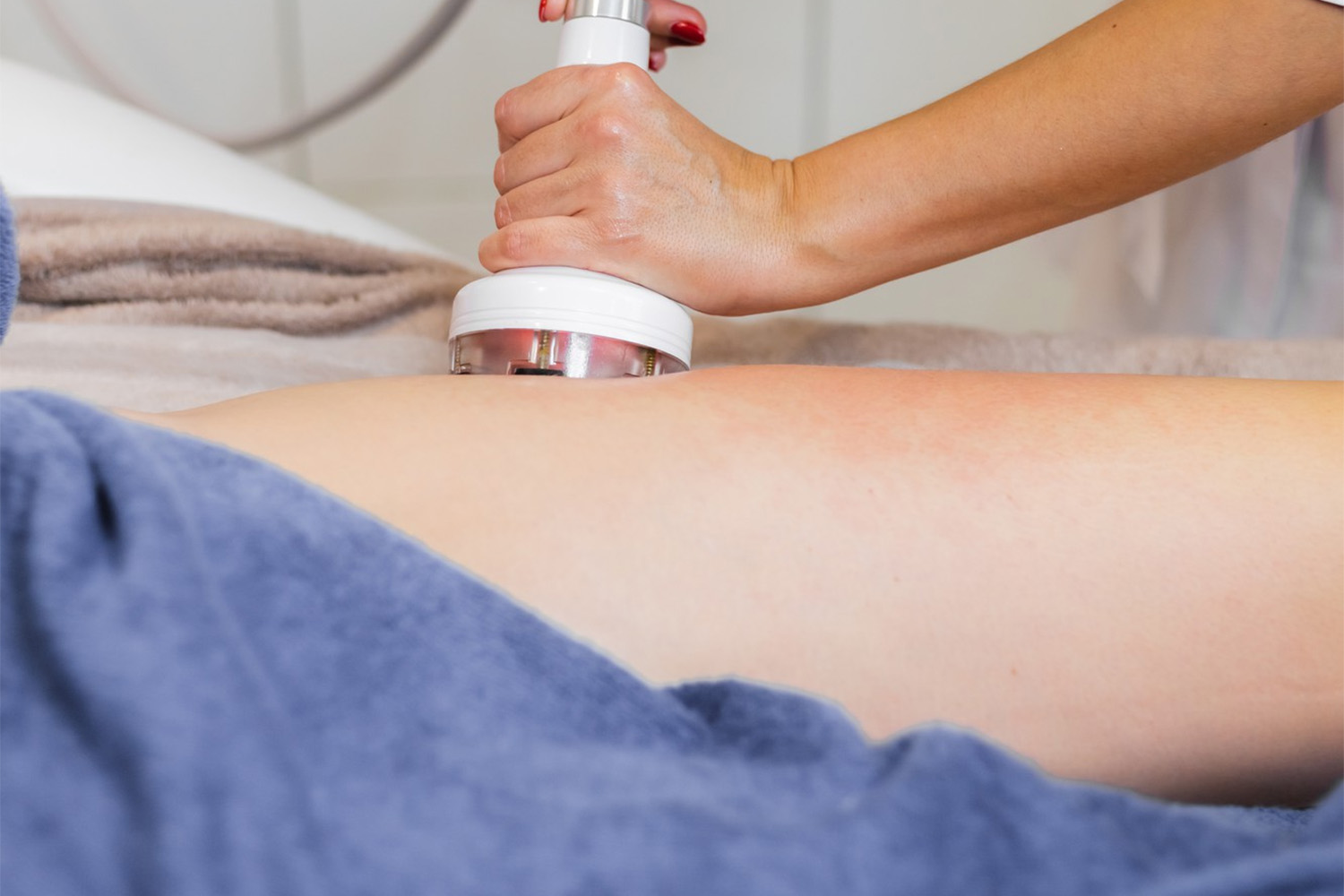
How It Works
Generates lower-energy pressure waves that radiate outward from the applicator. Treats broader area but shallower depth. Depth typically 3-5 cm.
What It Treats
Musculoskeletal conditions with broader involvement: chronic muscle tension, myofascial pain, superficial soft tissue issues, cellulite reduction (aesthetic application).
Equipment
Smaller, more portable devices. Available in physical therapy clinics, chiropractic offices, and massage therapy practices. Lower operator training threshold.
Sensation
Generally tolerable, similar to deep massage. Adjustable intensity accommodates different tolerance levels.
The Key Technical Differences
Energy Level
Focused shockwave: 0.05-0.55 mJ/mm². Radial pressure wave: 0.01-0.30 mJ/mm². Lower energy for radial makes it more comfortable but less penetrating.
Frequency
Focused shockwave: variable, often 1-15 Hz. Radial pressure wave: 1-21 Hz. Similar frequency ranges but different waveform characteristics.
Penetration Depth
Focused shockwaves reach deep target structures. Radial covers a broader superficial area. Match to target tissue location.
Precision
Focused shockwave targets specific points. Radial treats broader areas. Different applications for different needs.
When Focused Shockwave Is Preferred
Plantar Fasciitis
Deep tissue involvement. Focused shockwaves reach the plantar fascia effectively. Research supports its use.
Calcific Tendinitis
Calcium deposits in tendons. Focused shockwaves can break up deposits. Specific targeted treatment.
Chronic Tendinopathies
Long-standing tendon issues. Focused shockwave targets specific problem areas.
Kidney Stones
Medical extracorporeal shock wave lithotripsy uses focused shockwaves to fragment stones. Specialised medical application.
When Radial Pressure Wave Therapy Is Preferred
Chronic Muscle Tension
Broader area treatment. Radial pressure waves work across larger muscle groups.
Myofascial Pain
Fascial restrictions across broader areas. Radial waves stimulate broader tissue.
Recovery from Athletic Training
General muscle recovery, broader treatment areas. Sports medicine common application.
Aesthetic Applications
Cellulite reduction. Broader treatment areas benefit from radial approach.
General Musculoskeletal Discomfort
When a specific deep target is not identified. acoustic pressure wave therapy provides broader support.
The Evidence Base
Research support varies by application. Plantar fasciitis has strong research for focused shockwaves. Musculoskeletal pain has moderate research for radial pressure waves. Aesthetic applications have variable research. PubMed hosts extensive research on both modalities.
Typical Treatment Course
Focused Shockwave
3-5 sessions typical. Weekly or biweekly. Results evaluated over 8-12 weeks. Some conditions require multiple treatment courses.
Radial Pressure Wave
4-8 sessions are typical. Weekly. Results are often visible sooner but progressive over treatment course.
Cost Comparison

Focused Shockwave
$150-$500 per session typical. Full course $500-$2,500.
Radial Pressure Wave
$100-$300 per session typical. Full course $500-$1,500.
Insurance Coverage
Coverage varies significantly. Focused shockwave for specific FDA-approved conditions (plantar fasciitis, calcific tendinitis) may have insurance coverage. Radial pressure waves and other applications are typically not covered. Verify with your insurer directly.
Safety Considerations
Both are generally safe with proper application. Contraindications: pregnancy, active cancer in treatment area, coagulation disorders, active infection at site, recent cortisone injection at site. Discuss with your provider before starting.
Combining with Other Therapies
Both often combine well with: massage therapy, stretching, strengthening exercises, physical therapy programmes. Comprehensive approaches typically outperform any single modality.
The Marketing Confusion
Marketing sometimes uses “shockwave” for radial pressure wave devices because “shockwave” is a more recognisable term. This creates confusion. Ask specifically whether the equipment is focused or radial.
Finding Qualified Providers
For Focused Shockwave
Orthopaedic clinics, sports medicine practices, some hospitals. Specialised equipment less widely available.
For Radial Pressure Wave
Physical therapy clinics, chiropractic practices, massage therapy establishments. More widely available. Enhancing Massage offers radial therapy as part of comprehensive care.
What to Expect at a Session

Assessment of treatment area. Gel applied to skin (couples the wave to tissue). Applicator applied to the treatment area. 5-15 minutes of treatment per area. Post-treatment discussion of expected effects.
Working with Your Healthcare Provider
Both therapies should complement rather than replace medical care. Discuss with your physician, physical therapist, or specialist. The Mayo Clinic covers integrative therapies including acoustic wave modalities.
Choosing the Right Therapy for You
Deep-tissue targeted condition: consider focused shockwave. Broader musculoskeletal issue: consider radial pressure wave therapy. Chronic condition with specific target: focused. General wellness or recovery: radial. Discuss with your provider.
Working with Enhancing Massage
Enhancing Massage offers radial pressure wave therapy and related modalities. Consultation helps determine appropriate treatment. The FAQ page addresses common questions.
FAQs
Are radial pressure wave therapy and shockwave therapy the same?
Related but technically different. Focused shockwaves target deep specific structures with high energy. Radial pressure waves treat broader areas with lower energy.
Which is more effective?
Depends on the condition. Focused shockwave for deep specific issues. Radial for broader musculoskeletal support.
How many sessions are typical?
Focused shockwave: 3-5 sessions. Radial: 4-8 sessions. Weekly or biweekly.
Are these therapies painful?
Focused shockwaves can be uncomfortable to painful. Radial pressure waves are more tolerable, similar to deep massage.
Where can I get radial pressure wave therapy?
Visit our website for services and consultation.